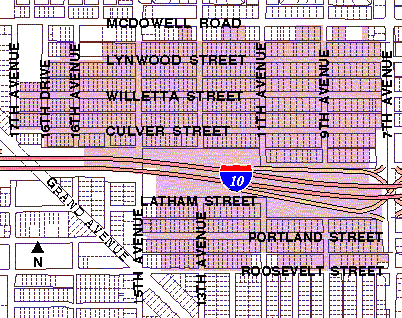
LOCATION: Generally bounded by McDowell Road to Roosevelt Street, and 7th to 17th Avenues.
PERIOD OF SIGNIFICANCE is 1921-1942.
History of the F. Q. Story Neighborhood
The F.Q. Story Historic District (Story F.Q.) is a neighborhood located in central Phoenix, Arizona, USA. The neighborhood runs from McDowell Road south to Roosevelt Street and from Seventh Avenue west to Grand Avenue. The Neighborhood as well as many of the individual houses are listed on the National Register of Historic Places.
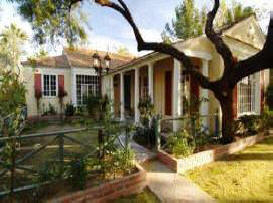
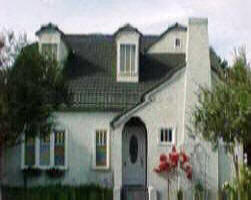
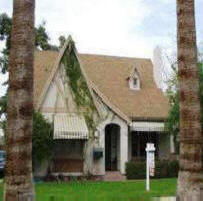
The F.Q. Story neighborhood consists of 602 homes that were constructed from the late 1920's through the late 1940's. A variety of architectural styles, including Spanish Colonial Revival, English Tudor, Craftsman bungalows as well as transitional ranch are represented within the neighborhood.
FQ Story is one of the most desirable neighborhoods in Central Phoenix. Beautiful streets are lined with well cared for Tudors, Spanish Revivals, and Bungalows dating from the early 1920's, some with detached garages or porte cocheres, manicured green lawns and colorful, impressive gardens. These streets beg to be driven slowly so you can admire the scenery, smile and wave to the neighbors who are walking their dogs, watering their lawns or hanging out on their historic front porches.
Some of the oldest and most picturesque homes in central Phoenix can be found in FQ Story. The homes average around 1,300 to 1,800 square feet, typically with 3 bedrooms, 1-2 baths, hardwood floors and just flat out charm. If you love FQ Story you'll probably like the historic districts homes in Encanto-Palmcroft or La Hacienda.
Francis Quarles Story
In 1887, Francis Quarles Story, a Boston wool merchant whose ill health had taken him to California a decade before, purchased the acreage that is today the F.Q. Story Historic District. He had settled in Los Angeles County, studied the cultivation of citrus, planted orange groves, and is credited with founding the national advertising campaign that made the Sunkist Orange famous. Active in many educational and conservation endeavors, F.Q. Story was a director and president of the Los Angeles Chamber of Commerce and a tireless booster of commercial and industrial enterprises in California and Arizona. Story and other prominent southern California landowners expanded into the Salt River Valley of Arizona in the late 1880's, investing in land and promoting both agricultural and town site development.
Although he never lived in Phoenix, Story was involved in numerous projects, such as the design and construction of the 100 foot wide Grand Avenue thoroughfare in 1887 and the subsequent building of its streetcar line. In the early 1900's, Story was influential in the founding of the Grand Avenue and University Additions, but their development was disappointing. In spite of having announced in 1910 plans to subdivide the 200 acre parcel, which would become the Story neighborhood, he sold the entire parcel to the Phoenix firm of Jordan, Grace and Phelps in 1919.
Francis Quarles Story, for whom the neighborhood was named, was involved in numerous developments in early Phoenix, including the construction of Grand Avenue in 1887 and its subsequent streetcar line. He is also credited with the advertising campaign which made the Sunkist Orange famous.
In 1920, when development of the F.Q. Story neighborhood began, Phoenix had a population of 29,000. It was advertised as a streetcar suburb, being close to the Grand Avenue and Kenilworth carlines. The first houses were clustered by the streetcar line at the eastern edge of the neighborhood. As building proceeded westward and the auto became more common, houses began to feature detached garages and porte cocheres.
The last development phase began in 1927, encompassing eighty acres from 11th to 15th Avenues, between McDowell Road and Roosevelt Street.
Development hit its peak in 1930 with the construction of 133 new houses, only to falter as the Depression hit Phoenix. Construction declined, but by 1938, approximately seventy-five percent of the F.Q. Story Addition had been completed.
Promotion
In 1920, when development of what is now the F.Q. Story Historic District began, Phoenix had a population of 29,000; almost six times what it had been at the turn-of-the-century. Grand Avenue had been built to link central Phoenix with the thriving agricultural communities of Glendale and Peoria. Like the nearby Roosevelt neighborhood, Story was advertised as a streetcar suburb, being close to the Grand Avenue and Kenilworth carlines. As in other developments oriented to the streetcar, Story was laid out with narrow, deep lots. The streetcar line at the eastern edge of the neighborhood clustered the initial houses. By the middle of the decade, as the automobile became more common, houses located further west began to incorporate detached garages and side yard porte coheres appeared. Their presence reflects the growing impact of the automobile on architecture and suburban American life by the mid 1920's.
When subdivision of the F.Q. Story Addition began, it was described in advertisements in the Arizona Republican in March of 1920 as "The Real Estate Event of the Season!" and "The Place, the Thing, and the Time you have been waiting for." Advertising boasted that the developers "expect to sell this entire tract within thirty days." In spite of the hype, only one house was built in all of 1921. This was due to the fact that the area lay directly in the floodway of Cave Creek, which in 1921, inundated the entire western end of the city and put two feet of muddy water on the first floor of the State Capitol just a mile to the south. No lives were lost, but property damages were severe and estimated to have exceeded the million-dollar mark.
Residential Development
After Cave Creek Dam was completed in 1923, thirteen more homes were built, and in January of 1924, the Dwight B. Heard Investment Company reopened the original Story Addition. The newly formed partnership of Lane-Smith opened North Story, and by 1926, a total of 113 homes had been built on streets from Roosevelt and McDowell between 7th and 9th Avenues. Both sections had a requirement that buildings cost a minimum of $5000. The subdivision also had gas and electrical service. Kenilworth School had opened in 1920, and in 1926, Franklin School was built on McDowell at 17th Avenue.
Development Accelerates
The last development phase of the Story Addition began in 1927 when "New Story" opened, covering the eighty acres from 11th to I 5th Avenues, between McDowell Road and Roosevelt Street. At $3000 to $4000, building restrictions were slightly lower here and duplexes were permitted in certain sections.
In July 1927, the developers, Lane-Smith Investment Company, encouraged sales by having A.F. Wasielewski Construction Company construct a "model home" at 1106 West Lynwood, a novel idea for the period. By September forty more homes had been built. At the same time, the remaining westerly portion of F.Q. Story's land was opened as "West Story" by developers Cowley, Higgins and Delph Company. It was also known as Franklin Addition, named for the new primary school nearby. Building restrictions were more modest still, just $2500 and $2200, which allowed working families to build in the area.
Development hit its peak in 1930 with the construction of 133 new houses, only to falter as the effects of the Depression hit Phoenix. Construction declined, but by 1938, approximately seventy-five percent of the F.Q. Story Addition had been developed.
Typical Phoenix Neighborhood
Men of wealth and influence, who bought large blocks of land for resale, never intending to live in the area, initiated the F.Q. Story neighborhood as a speculative venture. In its historic period, it was a typical middle class neighborhood.
In the eastern sections with the higher building restrictions, the earliest Story residents were mainly of white-collar status professional people such as physicians, lawyers, presidents and owners of small to medium-sized companies. On the west side were government personnel, sales people of all kinds, and a number of contractors who built in the area. All three partners in the realty company of Cowley, Higgins and Delph lived in "West Story," as did a number of O'Malley Lumber Company employees.
The people who were first drawn to the neighborhood were considered one of its primary attractions. At one point during its development, the Price & Price Investment Company ran an advertisement listing the names and occupations of nearly all Story Addition property owners in an attempt to encourage sales. Homes were fairly small and, even at their most lavish, relatively inexpensive in comparison with some of the other emerging Phoenix neighborhoods of this era.
Neighborhood Commercial Activity
The developers of Story Addition in the 1927-28 period also planned for commercial activities in the neighborhood. Commercial buildings were constructed in eight locations. Characteristic of commercial development of the period, these buildings were located on corner lots on McDowell, Roosevelt, and Grand Avenue, the chief thoroughfares.
The only building constructed during this time, which remains intact in the neighborhood today, is the Pay'n Takit Market at 7th Avenue and Roosevelt. This small grocery was the twenty-third store opened up by the Pay'n Takit Grocery Company. A Phoenix chain founded
in 1917, they promoted the "innovative" concept of self service or 11 cash and carry."
906 W. Lynwood Street in F.Q. Story
Phoenix, AZ 85007
(Link to flyer below)
Built in 1926
3 Bedrooms, 2 Full Bathrooms
1,745 Original Square Feet
PLUS Finished
Basement with 7' Ceilings
AN ABSOLUTE MUST SEE!
SOLD but we have many others in various price ranges!
You WON'T want to miss this one! THE most IMPECCABLE restoration, re-purposed and remodeled home you'll see in ages for under $400,000!
Call for more info & download this 2-sided flyer!
906 West Lynwood Street Flyer.pdf